Paint Protection Film in Grand Junction for vehicles losing finish to road debris, rock chips, and abrasion
Clear Protection That Stops Paint Damage Cold
NC Auto Automotive Styling installs paint protection film in Grand Junction for vehicle owners who want to stop paint damage before it happens rather than repair it after the fact. Road debris, gravel, and highway grit are constant hazards on the routes in and around this area, and once a chip or scratch breaks through the clearcoat, the underlying paint is vulnerable to oxidation that spreads outward from the impact point. PPF places a durable, optically clear urethane barrier directly over the painted surface so that impacts are absorbed by the film rather than the finish beneath it.
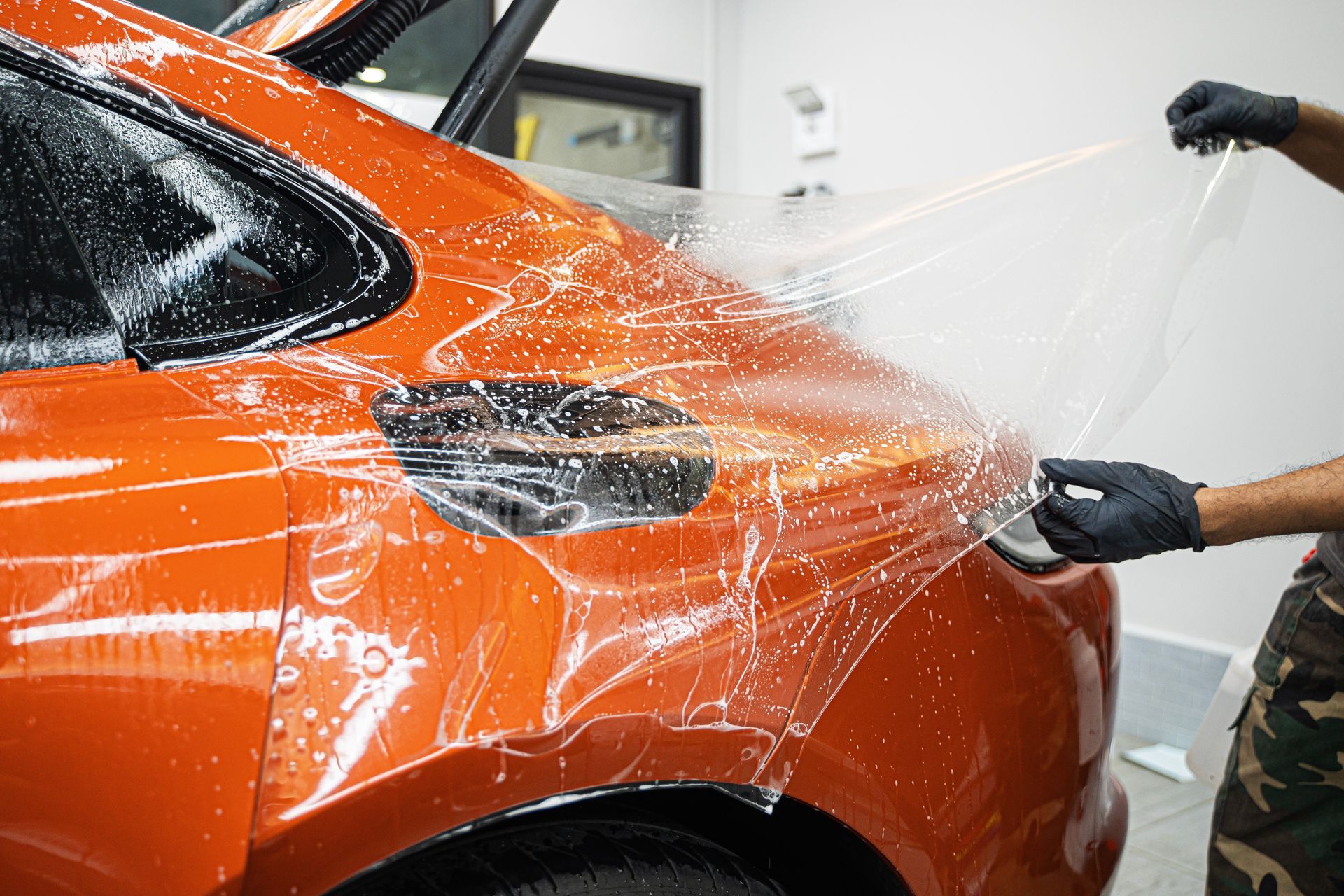
NC Auto Automotive Styling works exclusively with Pure PPF, a brand built around high-clarity urethane film engineered for self-healing surface behavior—meaning light surface scratches in the film itself close over time with heat exposure rather than remaining as permanent marks. Installation begins with a thorough paint decontamination step to remove bonded surface particles that would otherwise create texture irregularities under the film. Panels are then measured, cut to precise fit using plotted templates, and applied wet to allow positioning before the adhesive sets. The film is worked from center to edges to eliminate air pockets, and edges are tucked or wrapped where panel geometry allows for clean termination lines that don't collect dirt.
Schedule a vehicle assessment with NC Auto Automotive Styling to identify which panels carry the most exposure risk and determine the coverage scope that makes sense for your specific vehicle.
Pure PPF's urethane construction gives the film a layered structure: an adhesive layer that bonds to paint without damaging it on removal, a thick urethane core that absorbs and distributes impact energy, and a self-healing topcoat that resists fine marring from wash brushes, branches, and incidental contact. That topcoat is what separates quality PPF from thinner entry-level alternatives—without it, the film surface accumulates swirl marks and eventually hazes, reducing clarity over the installation's lifespan. On high-impact zones like the leading edge of the hood, front bumper, fenders, side mirrors, and rocker panels, the film is doing the work that otherwise falls on touch-up paint and respray appointments.
Once the film is fully cured—typically a short window after installation during which the adhesive bonds completely—the treated panels look visually identical to unprotected paint, and any surface marks from installation fluid disappear as the film settles. What you notice afterward is what doesn't happen: chips that would have cut through to primer don't reach the paint, and swirl marks from routine washing stay on the film's topcoat rather than cutting into the clearcoat underneath. Pure PPF also accepts ceramic coating over the film surface, which adds hydrophobic behavior that makes maintenance washing faster and more effective.
Coverage can be configured by zone or as a full-vehicle wrap depending on vehicle use, storage conditions, and the owner's priorities. Partial coverage targeting the front clip and mirrors addresses the panels that accumulate the most impact exposure on typical driving routes, while full wraps are common on newer or higher-value vehicles where preserving factory paint across all surfaces is the objective. Edge termination strategy—where the film ends on each panel—affects both long-term durability and the visual cleanliness of the installation, and that decision is made panel by panel based on body line geometry.
How Paint Protection Film Works Against Surface Damage
These questions address how PPF installation works, what the film does, and what vehicle owners typically want to understand before committing to a coverage plan.
- What surface preparation is required before PPF can be installed? The paint must be fully decontaminated using a clay bar or equivalent process to remove bonded iron particles, tar, and surface deposits that would create raised texture under the film. Any existing paint correction—removing swirl marks or scratches—should also be completed before installation, because PPF locks in the paint condition it's applied over and those defects will remain visible beneath the film.
- How does self-healing film actually work on a molecular level? The topcoat on Pure PPF uses a polymer structure with elastic memory—when the surface is scratched lightly, heat causes the polymer chains to flow back toward their original orientation, closing the mark. Direct sunlight or a heat gun accelerates the process, and deeper cuts that penetrate through the topcoat into the urethane core won't self-heal, but they also typically won't reach the paint beneath.
- When should film be replaced rather than maintained? Film that has yellowed significantly, developed persistent cloudiness that doesn't clear after cleaning, or shows lifting edges that allow moisture intrusion beneath the adhesive should be replaced. High-quality urethane films like Pure PPF are engineered for multi-year service life, but installation environment, UV exposure, and chemical contact from harsh wash products all affect how long the film performs at full optical clarity.
- How does panel geometry on older or custom vehicles affect the installation process? Vehicles with compound curves, tight body lines, or aftermarket body kits require more extensive wet-working during installation to conform the film without tension wrinkles or lifted corners. On Grand Junction area vehicles where lifted trucks and customized builds are common, rocker panels, flares, and modified front ends often need section-cut approaches rather than single-piece coverage to achieve a clean, lasting result.
- What is the difference between PPF and a vinyl wrap in terms of function? Vinyl wrap is a color or finish change product—it's designed to alter appearance and provides only incidental surface protection. PPF is an impact-resistance product that is optically clear and engineered specifically to absorb physical damage. The two serve different purposes and can be used together, with PPF applied first to protect the paint and vinyl or ceramic applied over the top for appearance or additional surface behavior.
NC Auto Automotive Styling can walk through your vehicle's panel layout, current paint condition, and driving patterns to build a coverage plan that addresses actual risk rather than a generic package. Arrange a consultation to review your vehicle in person and get a clear picture of what Pure PPF installation involves for your specific make and model.
Common Questions About Paint Protection Film